
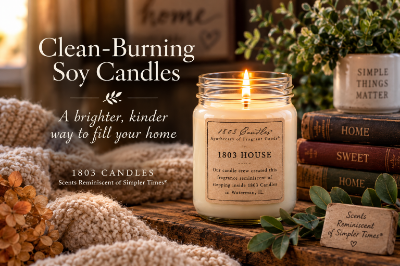
Scents Reminiscent of Simpler Times®
Clean-Burning Soy Candles & the Art of Hand Pouring
A candle can be simple, but making a good one is a craft. From choosing the wax and fragrance blend to preparing the wick, pouring the candle, and allowing it to cure, every step influences how the finished candle performs in your home.
At 1803 Candles, soy candles are part of a much bigger story: creating home fragrance that feels personal, familiar, and connected to the comforting scents of everyday life.
For shoppers looking for clean-burning soy candles, understanding the wax, the pouring process, and the people behind the candle can make choosing a fragrance feel a little more meaningful.
What Does “Clean-Burning Soy Candle” Mean?
The phrase “clean burning” is often used when talking about soy candles, but it is important to understand what it really means.
No burning candle is completely emission-free. Any flame produces combustion byproducts. However, soy wax is a popular candle wax because it is plant-based and can provide a steady, enjoyable burn when the candle is properly formulated, wicked, and maintained.
A well-made candle also depends on more than the wax itself. Wick selection, fragrance load, vessel size, burn time, and regular wick trimming all affect how the candle burns.
If you want to learn more about why 1803 uses soy wax and how to get the best performance from your candle, visit our About Soy page.
Why Soy Wax Is Popular for Home Fragrance
Plant-Based Wax
Soy wax is made from soybean oil, which makes it a plant-based alternative to traditional petroleum-derived paraffin wax.
Fragrance Experience
Properly formulated soy candles can provide an enjoyable fragrance experience as the wax warms and the candle develops a melt pool.
Part of the Craft
Soy wax gives candle makers another way to balance fragrance, wick performance, vessel size, and burn characteristics.
Hand-Poured Candles: Why the Process Matters
Hand pouring is more than simply filling a jar with wax. Each candle begins with a series of small decisions that affect how it burns and how the fragrance performs.
The wax must be prepared at the right stage, fragrance must be blended carefully, wicks must be selected and positioned correctly, and the candle must be given enough time to set and cure before it is ready to enjoy.
That hands-on process is one of the things that makes hand-poured 1803 soy candles feel different from a purely mass-produced product. There is still craft involved in getting the finished candle right.
The Artisan Side of Candle Making
Candle making sits somewhere between science and craft. There are technical considerations like wax temperatures, wick sizing, fragrance compatibility, vessel dimensions, and burn testing but there is also an artistic side.
Fragrance combinations have to feel balanced. A scent may need to evoke an orchard, a country kitchen, a fireplace, a pumpkin patch, or a memory without becoming too sharp, too sweet, or too flat.
That is where the artisan side of candle making comes in: taking individual fragrance notes and turning them into something that feels like a place, a season, or a familiar moment.
From Fragrance Notes to a Feeling
Some fragrances are memorable because they immediately create a picture in your mind.
Cider Mill can bring to mind crisp apples, cider donuts, and a fall afternoon at the orchard.
Grandma's Kitchen can feel like brown sugar, spice, buttery oatmeal, and time spent baking with family.
Home by the Fire can suggest fireplace woods, green sprigs, sandalwood, and a quiet evening indoors.
This connection between fragrance and memory is a big part of the 1803 Candles philosophy and the idea behind Scents Reminiscent of Simpler Times®.
The 1803 Candles Story
The story behind a candle company matters because fragrance is personal. People remember the candles they burned during holidays, family gatherings, moves, new homes, changing seasons, and ordinary evenings that later become meaningful memories.
1803 Candles was built around the idea of creating strongly fragrant soy candles inspired by those familiar experiences and by the comfort of home.
To learn more about how 1803 Candles began and the people behind the brand, visit our Our Story page.
What Goes Into a Well-Made Soy Jar Candle?
| Part of the Candle | Why It Matters |
|---|---|
| Soy Wax | Forms the base of the candle and affects melt behavior, fragrance release, and burn characteristics. |
| Fragrance Blend | Creates the scent experience and determines whether a candle feels fruity, bakery-inspired, woodsy, floral, fresh, or seasonal. |
| Wick | Wick size and placement help determine flame size, melt pool, and overall candle performance. |
| Jar or Vessel | Vessel size and shape work together with the wick and wax to influence how the candle burns. |
| Cure Time | Allowing the candle to set properly helps the wax and fragrance develop before the candle is burned. |
| Candle Care | Trimming the wick and allowing an appropriate melt pool can help the candle perform more consistently. |
How to Get the Best Burn From a Soy Candle
Trim the Wick
Follow the candle's care instructions and keep the wick properly maintained before each burn.
Allow an Even Melt Pool
Giving the wax enough time to melt evenly across the surface can help promote a more consistent burn.
Avoid Strong Drafts
Fans, vents, and open windows can affect the flame and cause the candle to burn unevenly.
Choosing a Soy Candle by Fragrance Family
Once you understand how the candle is made, the fun part is choosing the fragrance that feels right for your home.
Apple & Fruit
Orchard fruit, baked apple, cider, and bright fruity fragrances.
Bakery & Gourmand
Vanilla, butter, brown sugar, pastries, cookies, and dessert-inspired scents.
Pumpkin & Spice
Pumpkin, cinnamon, clove, maple, caramel, nutmeg, and warm spices.
Woods & Hearth
Cedar, fireplace woods, pine, sandalwood, musk, and rustic fragrances.
Flowers & Blooms
Floral scents ranging from light blossoms to fuller garden-inspired fragrances.
Fresh & Country
Clean, comfortable, country-inspired fragrances for everyday home scent.
You can also read our guide to choosing strong scented soy candles to learn how fragrance family, room size, airflow, and candle care can affect how noticeable a candle smells in your home.
Frequently Asked Questions About Soy Candles
Are soy candles clean burning?
Soy wax is a plant-based candle wax and is commonly chosen by people looking for an alternative to traditional paraffin wax. However, no burning candle is completely emission-free. Candle performance also depends on the wick, fragrance, vessel, burn conditions, and proper candle care.
What does hand-poured mean?
Hand-poured generally means the candle-making process involves manually preparing and pouring wax into the candle vessels rather than relying entirely on a large automated production line.
Why does wick size matter?
The wick helps control the flame and melt pool. A wick must be matched appropriately to the wax, fragrance, and vessel for the candle to burn as intended.
Why should I trim a candle wick?
Proper wick maintenance can help keep the flame at an appropriate size and support a more consistent burn. Always follow the care instructions provided with your candle.
Why do some candle scents remind me of certain places or people?
Fragrance can become strongly associated with repeated experiences, places, people, and traditions. Smelling a familiar aroma later can bring those memories back to mind.
A Candle Made to Feel Like Home
A good soy candle is more than wax in a jar. It is the combination of formulation, fragrance, craftsmanship, careful burning, and the memories that fragrance can create.
From apple orchards and country kitchens to fireplace evenings and family traditions, 1803 Candles creates fragrances inspired by the moments that make a house feel like home.
Learn more about why we use soy wax, read the 1803 Candles story, or explore our collection of strong scented soy candles .
Scents Reminiscent of Simpler Times®